
Our history
Founding and Early Vision (1973–1974)
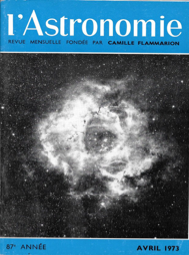
L’Astronomie, April 1973.
A seminal article:
“The Visual Observation of Variable Stars” Article by Michel Dumont and Alain Figer L’Astronomie, April 1973.
It describes the Argelander method for Visual Estimations of Star Brightness.
It provides the basics of the visual method and demonstrates its limitations while detailing the sources of error.
The required instrumentation is modest: the naked eye, binoculars, small telescopes, or refractors.
The article by Dumont and Figer (1973) highlights the errors inherent in visual measurements, such as the difference in perception of magnitude deviations from one observer to another, for example, a light curve of X Her:
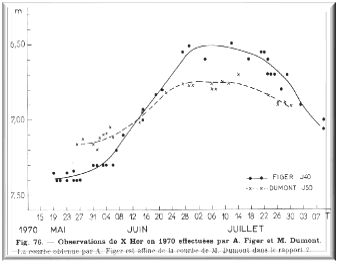
Light curve of X Her.
The authors demonstrate that statistical error processing allows for usable results. Analysis of observations by experienced observers shows that the standard deviation of the measurement distribution is close to 0.08 magnitudes. This suggests that the observation of variables with amplitudes of a few tenths of a magnitude is possible with this method.
The step towards the formation of a new group of amateur astronomers dedicated to observation was taken by Alain Figer’s call for an observation campaign of the star RV Tau, a campaign intended to be international (March 1974).
Following this campaign, which was responded to by French, Belgian, and Italian amateurs, a group was formed, first within the framework of the SAF commissions and then as an independent association.
Since then, the recruitment of observers has continued, with a constant renewal. Local teams have been formed in associations such as Massa (Italy), Toulouse (SAP), Valencia (AVA), Sabadell (AAS), Yvelines (Sadr/Albireo78).
Organization of meetings and observation camps in Europe
Meetings:
First in Paris then everywhere, Observatoire de Haute Provence, Toulouse (Occitanie), Carona (Ticino, CH), Cà del Monte (Pavia), Rodez (Occitanie), Aras de los Olmos (Valencia), Sabadell (Catalunya), Strasbourg (Alsace), Montsec (Catalunya), Nantes (Brittany)…
Marly-Le-Roy (Paris), 1980.
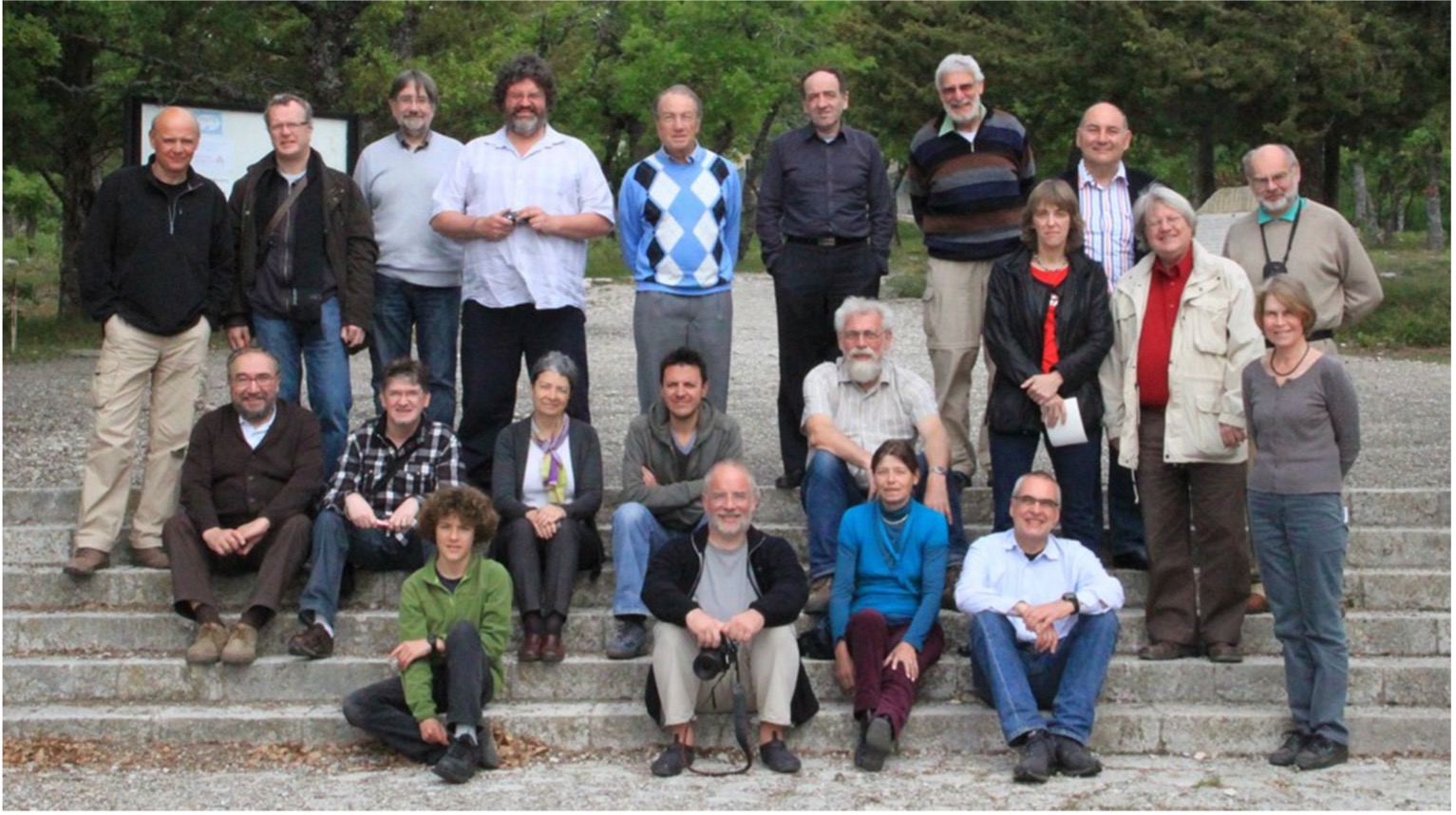
Observatoire de Haute Provence, 2011.
Observation camps:
Southern France and Spain (between the 1970s and 1990s).
Vars (Queyras, Alps), Saint Rome de Dolan (Occitanie), Casinos (Valencia) …
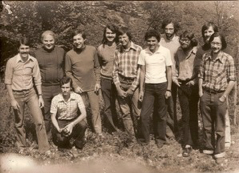
Saint Rome de Dolan (Occitanie), 1977.
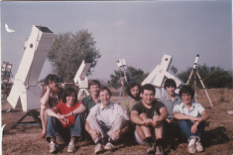
Bédarieux (Occitanie), 1982.

Casinos (Valencia), 1983.
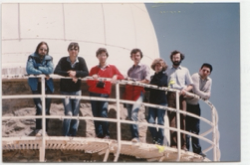
Pic du Midi (Occitanie), 1983.
Technological Transition (1990–2000)
The shift from visual estimates to CCD photometry by some observers greatly improves precision.
The Focus on RR Lyrae stars begins, becoming GEOS’s main scientific activity and in 1999 a database for pulsating stars of the RR Lyr type is created. http://rr-lyr.irap.omp.eu/dbrr/
The collaboration expands internationally, with new members in Japan, Norway and Czech Republic.
GEOS publishes results in journals and conference proceedings, establishing credibility in professional astronomy.
Consolidation and Modern Era (2010–2020)
The European Variable Star (EVS) meetings are underway: Groningen, Helsinki, Hamburg, Grimbergen and GEOS is always represented.
Regular videoconference meetings begin in 2020, ensuring continuity of collaboration across Europe.
The campaigns now include exoplanet transits observations (e.g., CoRoT-10b) and long-term monitoring of Cepheids and eclipsing binaries.
Recent Achievements (2021–2025)
Discoveries:
New high amplitude δ Scuti star in Auriga (Marc Serrau, 2021).
Rare, peculiar RRc star studied with TESS (Transiting Exoplanet Survey Satellite) data and GEOS observations (Correa, Vilalta, Le Borgne, 2023).
Period variation studies:
Cepheids like W Gem and SV Vul analysed over more than a century of data.
RR Lyrae and eclipsing binaries monitored with O-C diagrams.
Technology:
DSLR (Digital Single Lens Reflex) measurements with smart telescopes begin just after Nantes meeting.
Society:
GEOS counts 76 members across Europe, continuing its mission of bridging amateur and professional astronomy.
Meetings:
GEOS is co-organizing the EVS 2023 meeting in Barcelona with the Agrupación Astronómica de Sabadell.
GEOS Symposium is organized in Nantes in April 2025.
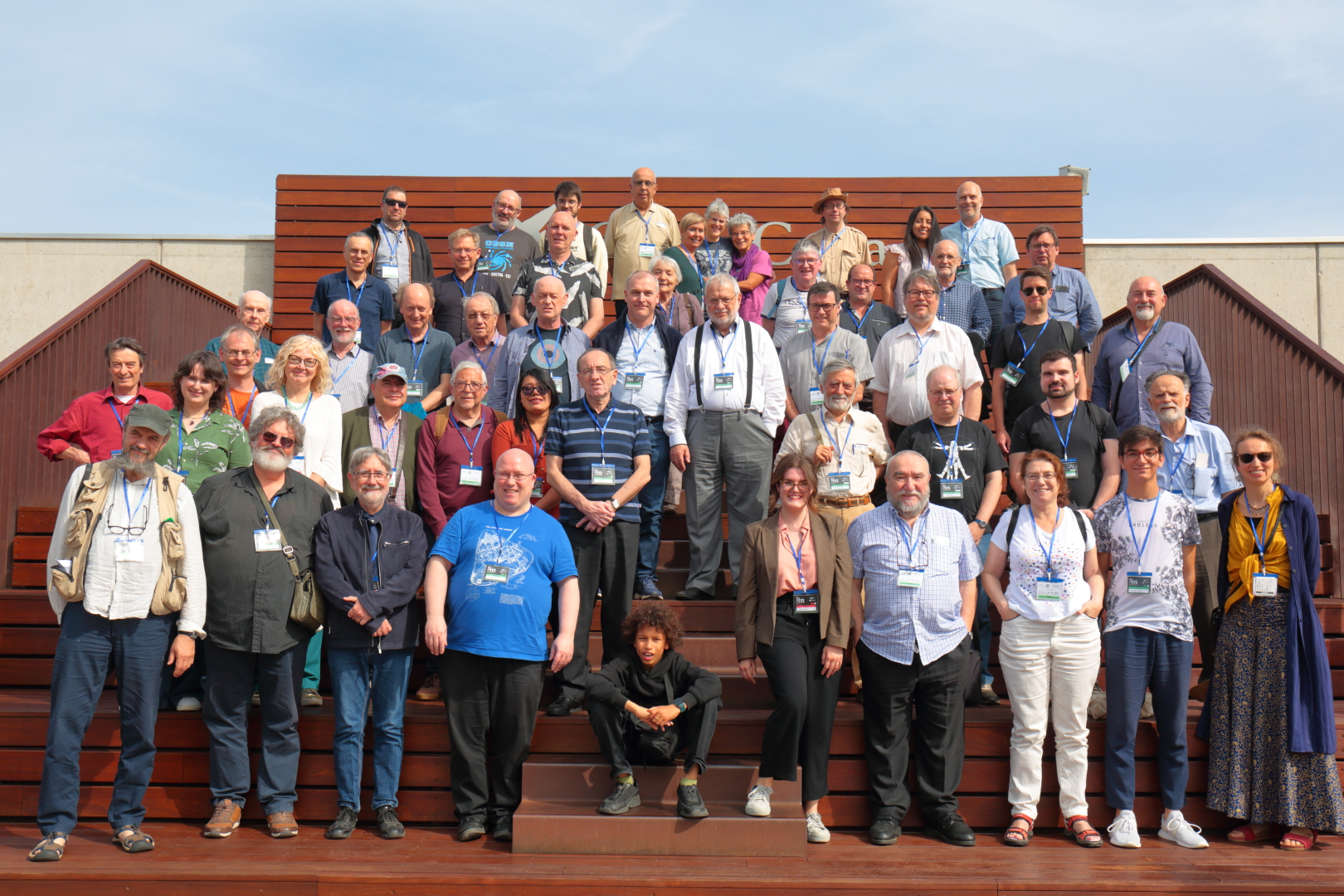
5th European Variable Star Meeting, Barcelona.
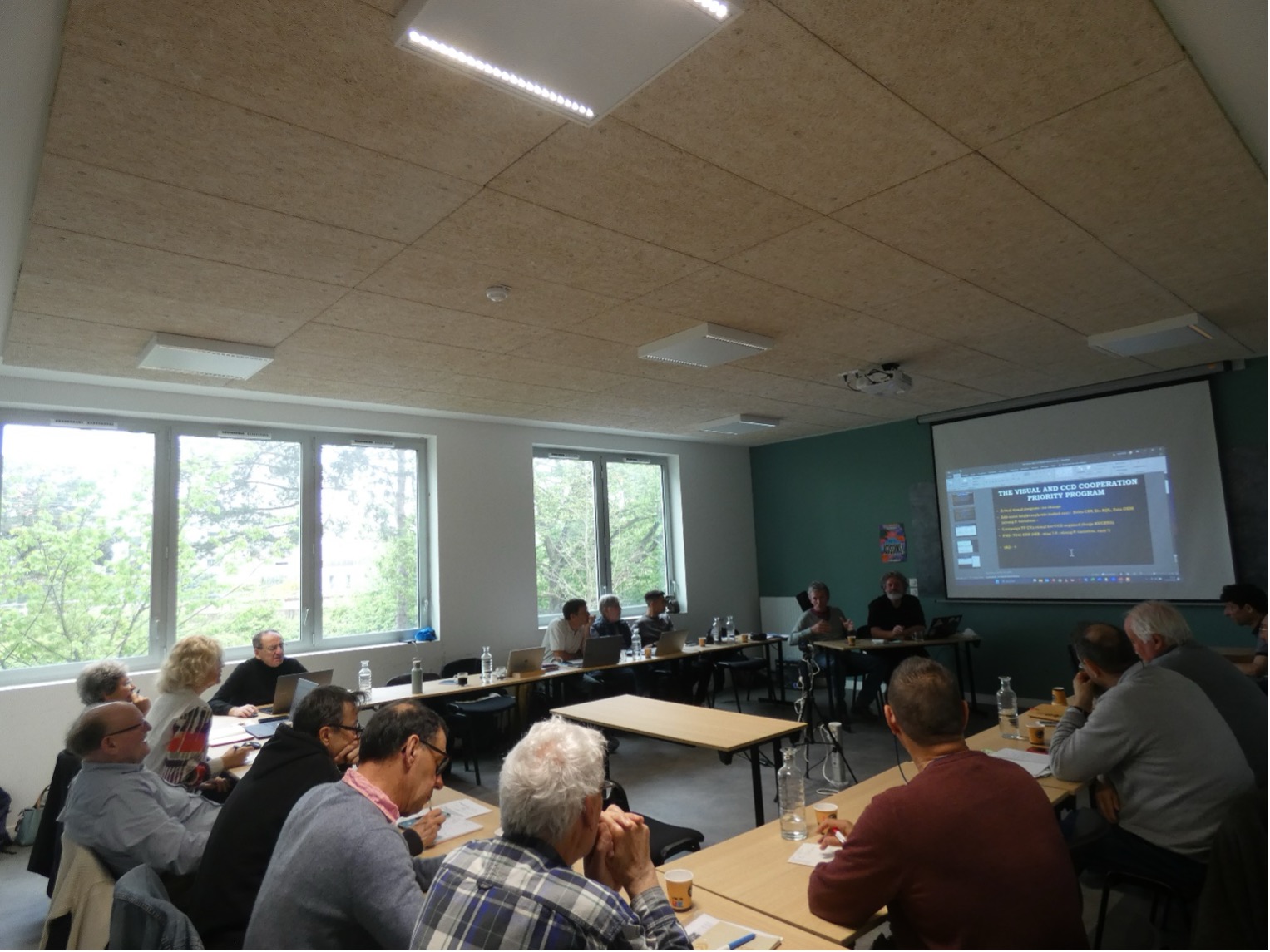
Nantes, April 2025.
Legacy
From a modest beginning with binoculars and naked-eye estimates, GEOS has grown into a European network of amateur and professional astronomers. Its milestones show a steady evolution:
- From visual methods to CCD precision.
- From local observation camps to international conferences.
- From individual campaigns to long-term scientific monitoring.
GEOS remains a model of Pro-Am collaboration, proving that dedicated amateurs can make lasting contributions to astrophysics.